Before this month is over, Makayla and I will be on our way to Ohio for her surgery! Our flight is booked, and our room is reserved at the Ronald McDonald House. We'll be in Ohio for 10 days, this time, and Makayla and I will be going on our own.
I feel confident that this surgery will make a huge difference in Makayla's life, but that isn't easing any of the anxiety. Traveling to Ohio with my husband's help, in April, was a huge challenge, so traveling with her on my own (and while she is recovering from surgery) is going to be exhausting. Judging by how hard getting a new set of molars has been for her over the past few weeks, I am anticipating that the recovery from her surgery will be grueling. For that reason, I am glad that we'll be stating for a week post op, rather than jumping on a plan immediately. From what I have read, the pain is much more manageable after the first three days.
Since getting home from Ohio in April, we have been dilating her left eye in lieu of patching, in preparation for her surgery. We have noticed that since we started doing that, she is no longer using the null point we identified months ago and that was confirmed by Dr. Hertle. I am currently waiting on a call back from Dr. Hertle so see if this is normal, or if it's something we should look into further before proceeding with the null point surgery. In the mean time, I spoke to a woman on the American Nystagmus Network's facebook page, who recently had an eye surgery. She said that during the healing process she was forced to use one eye and that she identified a new unique null point for each eye when they were used independently, which was different from the one she uses when her eyes are working together. Regardless of Dr. Hertle's opinion of her null point possibly changing, we are still going forward with planning the surgery since part of the surgery includes fixing or improving her strabismus and slowing her nystagmus, which is not related to her null point.
So much excitement, anxiety, optimism and hope! I can't wait to see what the next year will hold for us!
As Makayla Sees It

Friday, July 6, 2012

Tuesday, June 26, 2012
A Geneticist in Our Future
We FINALLY have an appointment for Makayla to see a geneticist! For...late November (ugh).
During my conversation with the geneticist, she explained that it would be very unlikely that Makayla would have Ocular Albinism (OA) because it is something that is typically passed down only from mother's to their sons, and that Makayla is much more likely to have Oculocutaneous Albinism (OCA).
I was a little confused by this, because I had read and understood that Makayla could have OA if my husband and I both carried the recessive gene and that it's only passed from mother to son when the mother carries a dominant gene. I'm a science nerd with a particular interest in genetics, so I don't typically find myself lost when talking genes, but we agreed that we'll finish this genetics lesson when we meet in Novemeber. I am so looking forward to it!
*Here's a short blurb from the National Organization of Albinism and Hypopigmentation (NOAH) on the differences between OA and OCA and types of albinism:
During my conversation with the geneticist, she explained that it would be very unlikely that Makayla would have Ocular Albinism (OA) because it is something that is typically passed down only from mother's to their sons, and that Makayla is much more likely to have Oculocutaneous Albinism (OCA).
I was a little confused by this, because I had read and understood that Makayla could have OA if my husband and I both carried the recessive gene and that it's only passed from mother to son when the mother carries a dominant gene. I'm a science nerd with a particular interest in genetics, so I don't typically find myself lost when talking genes, but we agreed that we'll finish this genetics lesson when we meet in Novemeber. I am so looking forward to it!
*Here's a short blurb from the National Organization of Albinism and Hypopigmentation (NOAH) on the differences between OA and OCA and types of albinism:
Types of Albinism
While most people with albinism have very light skin and hair, not all do. Oculocutaneous (pronounced ock-you-low-kew-TAIN-ee-us) albinism (OCA) involves the eyes, hair and skin. Ocular albinism (OA), which is much less common, involves primarily the eyes, while skin and hair may appear similar or slightly lighter than that of other family members.
Over the years, researchers have used various systems for classifying oculocutaneous albinism. In general, these systems contrasted types of albinism having almost no pigmentation with types having slight pigmentation. In less pigmented types of albinism, hair and skin are cream-colored and vision is often in the range of 20/200. In types with slight pigmentation, hair appears more yellow or red-tinged and vision may be better. Early descriptions of albinism called these main categories of albinism “complete” and “incomplete” albinism. Later researchers used a test that involved plucking a hair root and seeing if it would make pigment in a test tube. This test separated “ty-neg” (no pigment) from “ty-pos” (some pigment). Further research showed that this test was inconsistent and added little information to the clinical exam.
Recent research has used analysis of DNA, the chemical that encodes genetic information, to arrive at a more precise classification system for albinism. Four forms of OCA are now recognized – OCA1, OCA2, OCA3 and OCA4; some are further divided into subtypes.
Researchers have also identified several other genes that result in albinism with other features. One group of these includes at least eight genes leading to Hermansky-Pudlak Syndrome (HPS). In addition to albinism, HPS is associated with bleeding problems and bruising. Some forms are also associated with lung and bowel disease. HPS is a less common form of albinism but should be suspected if a person with albinism shows unusual bruising or bleeding.
- Oculocutaneous albinism type 1 (OCA1 or tyrosinase-related albinism) results from a genetic defect in an enzyme called tyrosinase (hence ‘ty’ above). This enzyme helps the body to change the amino acid tyrosine into pigment. (An amino acid is a “building block” of protein.) There are two subtypes of OCA1. In OCA1A, the enzyme is inactive and no melanin is produced, leading to white hair and very light skin. In OCA1B, the enzyme is minimally active and a small amount of melanin is produced, leading to hair that may darken to blond, yellow/orange or even light brown, as well as slightly more pigment in the skin.
- Oculocutaneous albinism type 2 (OCA2 or P gene albinism) results from a genetic defect in the P protein that helps the tyrosinase enzyme to function. Individuals with OCA2 make a minimal amount of melanin pigment and can have hair color ranging from very light blond to brown.
- Oculocutaneous albinism type 3 (OCA3) is rarely described and results from a genetic defect in TYRP1, a protein related to tyrosinase. Individuals with OCA3 can have substantial pigment.
- Oculocutaneous albinism type 4 (OCA4) results from a genetic defect in the SLC45A2 protein that helps the tyrosinase enzyme to function. Individuals with OCA4 make a minimal amount of melanin pigment similar to persons with OCA2.
Thursday, June 14, 2012
Morning Brain Spillage: Albinism
When Makayla was three months old, and her pediatrician diagnosed her with nystagmus, one of the first things they asked me was if it was possible that she was albino. I laughed and just said that she took after me, thinking to myself, "can they not see how light I am?"
My own dad (who is very dark in his skin, hair, and eyes) and I joked when I was a kid, that my mom's family was albino and that's why they, and I, were so, so, so pale (I actually REALLY hate the term pale, I prefer fair. Pale sounds sickly, fair is just really light.). But it was a joke! I already knew that nystagmus was common in people with albinism, but obviously the doctors were just jumping to conclusions, because my daughter has all the same coloring as me (my eyes are green now, but were blue through elementary school and started changing in 7th grade), and I could not possibly be albino, since my eyes are green, and I have freckles, and although none of my friends would call it a tan, my skin tone does change some, when I get sun. Although, my hair was white as a baby, whiter than Makayla's, it's now a very dark blonde, maybe even a light brown. Obviously, I can't be albino.
But with more and more doctors asking about Makayla being albino, and now with her ocular albinism diagnosis, I'm learning so much more about albinism. You might think of Powder or Whitey from Me, My Self & Irene when you think of someone with albinism, with the red or blue eyes, and the white hair and the translucent skin. In fact, there are many different types of albinism and some include having some levels of pigment. Now knowing this, I've asked doctors, if Makayla is albino, is it possible I am too? But I'm always shut down, told that since my eyes are fine, I can't be albino, and that if I were the one with albinism that it would have been passed down to Austin, not Makayla (There is a dominant gene carried by mothers and passed down to sons, without the father having to carry a recessive gene, because Makayla is effected, and not Austin, we know this is not the case for us).
The more I read, I'm realizing that just may not be true. It really is frustrating how much information doctors just blurt out without really knowing for sure.
I was catching up on my friend Amy's blog, Through the Eyes of Liam, and was reading a post she has on Oculocutaneous Albinism. In the post, she lists characteristics of the most common types of albinism, and I couldn't help but notice that this part, aside from the vision problems, describes me to a T:
There are many other types of albinism, so I have to wonder if there is one that would include the first half of this description, but leaves out the part about transillumination, or maybe the transillumination improves with age, because I remember being a lot more sensitive to light as a child than I am now. I remember my eyes aching when I stepped outside some mornings. I am just so curious... In a lot of ways it would make so much sense, like how my dad ca be so dark, but I'm so fair, and how I don't exactly tan in the sun, I turn a sort of pink color. It's not the same as a burn, but it's definitely not a a brown tan color.
I'm not sure what any of this actually means. It doesn't change my life in anyway, and it doesn't change the way we go about treating Makayla, but it sure is facinating to think that you can go 30 years and not know something to significant about your self. Regardless if I am albino or not, I probably at least carry the recessive gene, and my husband must also, in order for us to have passed it on to Makayla.
We are still waiting for the referral for genetic testing to come through. Our pediatrician has sent a request to Stanford, but they are so backed up with referrals we don't expect to hear from them until November and then probably wont have an appointment until early next year. That is just to see a geneticist and find out if our insurance will cover testing, which we don't think it does. Besides wanting to know to quiet my own curiosity, finding out will help us to learn how likely we would be to have more children with albinism, and how likely Makayla and Austin are to have children with albinism.
My own dad (who is very dark in his skin, hair, and eyes) and I joked when I was a kid, that my mom's family was albino and that's why they, and I, were so, so, so pale (I actually REALLY hate the term pale, I prefer fair. Pale sounds sickly, fair is just really light.). But it was a joke! I already knew that nystagmus was common in people with albinism, but obviously the doctors were just jumping to conclusions, because my daughter has all the same coloring as me (my eyes are green now, but were blue through elementary school and started changing in 7th grade), and I could not possibly be albino, since my eyes are green, and I have freckles, and although none of my friends would call it a tan, my skin tone does change some, when I get sun. Although, my hair was white as a baby, whiter than Makayla's, it's now a very dark blonde, maybe even a light brown. Obviously, I can't be albino.
But with more and more doctors asking about Makayla being albino, and now with her ocular albinism diagnosis, I'm learning so much more about albinism. You might think of Powder or Whitey from Me, My Self & Irene when you think of someone with albinism, with the red or blue eyes, and the white hair and the translucent skin. In fact, there are many different types of albinism and some include having some levels of pigment. Now knowing this, I've asked doctors, if Makayla is albino, is it possible I am too? But I'm always shut down, told that since my eyes are fine, I can't be albino, and that if I were the one with albinism that it would have been passed down to Austin, not Makayla (There is a dominant gene carried by mothers and passed down to sons, without the father having to carry a recessive gene, because Makayla is effected, and not Austin, we know this is not the case for us).
The more I read, I'm realizing that just may not be true. It really is frustrating how much information doctors just blurt out without really knowing for sure.
I was catching up on my friend Amy's blog, Through the Eyes of Liam, and was reading a post she has on Oculocutaneous Albinism. In the post, she lists characteristics of the most common types of albinism, and I couldn't help but notice that this part, aside from the vision problems, describes me to a T:
OCA1b- A quick rundown:
White or light yellow hair at birth but darkens with age, can change to a golden or light brownSkin remains white but often has some generalized pigmentationTans with sun exposureIris color remains blue or change to a hazel/green or brown/tanTransillumination shows in streaks or clumps of pigment in the irisFine granular pigment may develop over time in the retinaVisual acuity is usually between 20/100 and 20/200 but can be as good as 20/60Nystagmus and Strabismus is possible.Involves tyrosinase enzyme--which converts tyrosine (an amino acid) into melanin
There are many other types of albinism, so I have to wonder if there is one that would include the first half of this description, but leaves out the part about transillumination, or maybe the transillumination improves with age, because I remember being a lot more sensitive to light as a child than I am now. I remember my eyes aching when I stepped outside some mornings. I am just so curious... In a lot of ways it would make so much sense, like how my dad ca be so dark, but I'm so fair, and how I don't exactly tan in the sun, I turn a sort of pink color. It's not the same as a burn, but it's definitely not a a brown tan color.
I'm not sure what any of this actually means. It doesn't change my life in anyway, and it doesn't change the way we go about treating Makayla, but it sure is facinating to think that you can go 30 years and not know something to significant about your self. Regardless if I am albino or not, I probably at least carry the recessive gene, and my husband must also, in order for us to have passed it on to Makayla.
We are still waiting for the referral for genetic testing to come through. Our pediatrician has sent a request to Stanford, but they are so backed up with referrals we don't expect to hear from them until November and then probably wont have an appointment until early next year. That is just to see a geneticist and find out if our insurance will cover testing, which we don't think it does. Besides wanting to know to quiet my own curiosity, finding out will help us to learn how likely we would be to have more children with albinism, and how likely Makayla and Austin are to have children with albinism.
Tuesday, June 12, 2012
VEPs And Stuff
Oh bloggy, blog, blog. Did you miss me? It's been too long! Having this blog has not only helped me to connect with amazing moms of children with nystagmus and ocular albinism, but it helps me feel like I'm partaking in adult conversation when I'm locked in the house with toddlers for 12+ hours a day. There is only so much, "ew, stinky poopies!" a thoughtful and intelligent person can take! But...over the past two weeks, our normal routine was shaken up by a new, almost non-existent nap schedule, and I'm having a hard time figuring out where blogging fits back in.
Today, we spent all of our morning and most of the early afternoon out of the house, so they are pretty happy to be home and chasing after the dog, for now. And so, I write!

What took all morning was a visit to UC Berkeley. Almost a year ago, Makayla's vision therapist helped us get into a research study at UC Berkley, in which they are studying how children with visual impairments learn about, and understand, the world around them. For our participation in the study, the optometrist overseeing the study provides annual eye exams.
Makayla had her first when she was 9 months old, and we learned that she has only a very slight astigmatism, and that at that point glasses would not be beneficial. The optometrist also preformed a VEP during that visit, which Dr. Hertle was able to use, since Makayla did not cooperate in Ohio. The optometrist also predicted that, as her nystagmus improves (as it often does up until age 6), her vision may improve to be as good as 20/50 or 20/40. To give an idea of how good that is, my "bad eye" was 20/40 at my last eye appointment, thanks to astigmatism, but I can still drive without any required correction.
Today, I got to share with the optometrist all about our trip to Ohio, and that we'll be going back soon for surgery. I also shared with her that Dr. Hertle diagnosed her with a very mild form or ocular albinism. She was very excited to hear all the news and updates on Makayla but had her doubts about the ocular albinism diagnosis... She said that Makayla's ability to see contrast has greatly improved and that she is in the normal range for kids her age. She said that the VEP test showed that Makayla sees quite well, but noted a new nearsightedness. Part of Dr. Hertle's after surgery plan is to get Makayla in contacts as early as possible to help with light sensitivity and to slow her nystagmus, but since she now has a nearsightedness the optometrist predicts that by the time she is in the contacts, she will likely need a prescription.
We also did a new VEP test today, which Makayla was very cooperative and happy throughout. The VEP test is a strange looking test where they put several leads on Makayla's head for measuring her brain waves, as she watches a monitor with various moving and flickering lines. The optometrist explained that they are measuring her brain's response to various details and contrasts in the lines to determine how well she sees. They did the test with both eyes, then just with the left eye (since the left eye is currently dilated in preparation for her upcoming surgery), then they did both eyes at a further distance. They will be sending the results of the exam and the VEP test to Dr. Hertle before her surgery.
The optometrist says that Makayla sees very well. She said that her vision is "reduced by 2". Normal would be 0 and she explained that most the kids she sees with nystagmus and ocular albinism are reduced by 6 to 10. That being said, her depth perception will likely always remain very poor and she will always be sensitive to light, and obviously both of these things will effect her vision outdoors and in new places. The surgery that Dr. Hertle will be doing will still help her vision.
Today, we spent all of our morning and most of the early afternoon out of the house, so they are pretty happy to be home and chasing after the dog, for now. And so, I write!

What took all morning was a visit to UC Berkeley. Almost a year ago, Makayla's vision therapist helped us get into a research study at UC Berkley, in which they are studying how children with visual impairments learn about, and understand, the world around them. For our participation in the study, the optometrist overseeing the study provides annual eye exams.
Makayla had her first when she was 9 months old, and we learned that she has only a very slight astigmatism, and that at that point glasses would not be beneficial. The optometrist also preformed a VEP during that visit, which Dr. Hertle was able to use, since Makayla did not cooperate in Ohio. The optometrist also predicted that, as her nystagmus improves (as it often does up until age 6), her vision may improve to be as good as 20/50 or 20/40. To give an idea of how good that is, my "bad eye" was 20/40 at my last eye appointment, thanks to astigmatism, but I can still drive without any required correction.
Today, I got to share with the optometrist all about our trip to Ohio, and that we'll be going back soon for surgery. I also shared with her that Dr. Hertle diagnosed her with a very mild form or ocular albinism. She was very excited to hear all the news and updates on Makayla but had her doubts about the ocular albinism diagnosis... She said that Makayla's ability to see contrast has greatly improved and that she is in the normal range for kids her age. She said that the VEP test showed that Makayla sees quite well, but noted a new nearsightedness. Part of Dr. Hertle's after surgery plan is to get Makayla in contacts as early as possible to help with light sensitivity and to slow her nystagmus, but since she now has a nearsightedness the optometrist predicts that by the time she is in the contacts, she will likely need a prescription.
We also did a new VEP test today, which Makayla was very cooperative and happy throughout. The VEP test is a strange looking test where they put several leads on Makayla's head for measuring her brain waves, as she watches a monitor with various moving and flickering lines. The optometrist explained that they are measuring her brain's response to various details and contrasts in the lines to determine how well she sees. They did the test with both eyes, then just with the left eye (since the left eye is currently dilated in preparation for her upcoming surgery), then they did both eyes at a further distance. They will be sending the results of the exam and the VEP test to Dr. Hertle before her surgery.
The optometrist says that Makayla sees very well. She said that her vision is "reduced by 2". Normal would be 0 and she explained that most the kids she sees with nystagmus and ocular albinism are reduced by 6 to 10. That being said, her depth perception will likely always remain very poor and she will always be sensitive to light, and obviously both of these things will effect her vision outdoors and in new places. The surgery that Dr. Hertle will be doing will still help her vision.
Thursday, May 31, 2012
We Have A Date!
I received a very exciting call this morning from a bubbly woman at Dr. Hertle's office. She was very excited to tell me that they would be able to schedule Makayla's surgery for August 2nd, which is a full month or two earlier than we expected! I pretty much immediately burst into tears on the phone, but between fake coughs, lies about allergies, and asking the twerpies to settle down, I think I came off as a mostly sane, somewhat distracted mom of twins, rather than a hysterical mess.
Makyla's appointment will be very early in the morning. We'll have to be in the hospital at 6:30 a.m., that's 3:30 a.m. for us Californians! Her procedure will only last for about an hour and a half; however, we'll need to stay for several days so that Dr. Hertle can see her after the surgery and make sure she is doing well before sending us home. I'm actually relieved to be staying for a little over a week, because, from what I've read, the first three days, after the surgery, is excruciatingly painful, and I will feel better if she can sleep it off in our room at the Ronald McDonald House, rather than having to spend several hours flying.
Makayla's surgery will include a Bimedial Recession, Bilateral Inferior Recession and a Bilateral Superior Oblique Tenectomy. All those fancy words basically mean that they are going to fix her stamismus, or "lazy eye" and move her null point.
 Currently, Makayla's nystagmus is quietest in the lower field of her vision, so when she is trying hard to see something she often tilts her head back considerably and looks through the bottom of her eyes. That is her "null point." During her surgery, they will detach, and reattach her eye muscles in a way that her nystagmus is quietest in the center of her vision so that she no longer has to use a strange looking, and uncomfortable head position to utilize her best vision. To the left is a picture of Makayla using her current null point to look at me while I take her picture.
Dr. Hertle told us that he expects this procedure to also slow the oscillation of her nystagmus. However, he will see her again, six to seven months after her surgery, to measure her progress and determine if she will benefit from a second surgery to further dampen the oscillation of her nystagmus. When we saw Dr. Hertle in April, he said that he thinks we will probably do the second surgery.
Now the planing and preparation begins! I'm glad that although her surgery is a lot earlier than we expected, it is still far enough out for us to make arrangements and plans!
Makyla's appointment will be very early in the morning. We'll have to be in the hospital at 6:30 a.m., that's 3:30 a.m. for us Californians! Her procedure will only last for about an hour and a half; however, we'll need to stay for several days so that Dr. Hertle can see her after the surgery and make sure she is doing well before sending us home. I'm actually relieved to be staying for a little over a week, because, from what I've read, the first three days, after the surgery, is excruciatingly painful, and I will feel better if she can sleep it off in our room at the Ronald McDonald House, rather than having to spend several hours flying.
Makayla's surgery will include a Bimedial Recession, Bilateral Inferior Recession and a Bilateral Superior Oblique Tenectomy. All those fancy words basically mean that they are going to fix her stamismus, or "lazy eye" and move her null point.
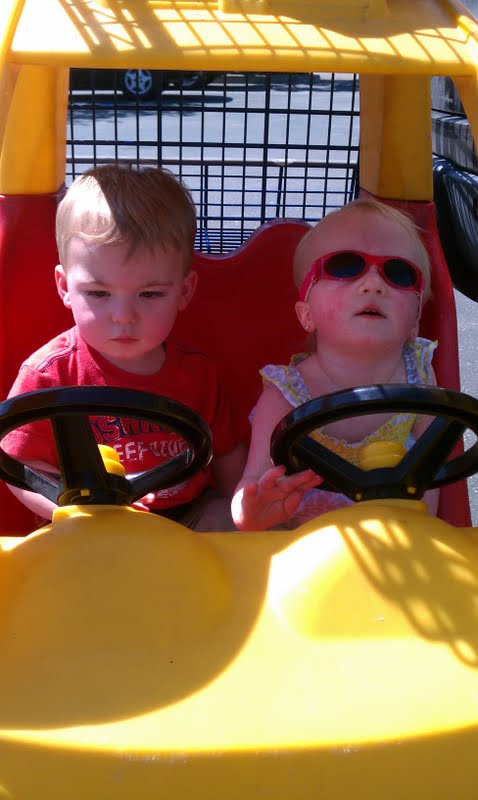
Dr. Hertle told us that he expects this procedure to also slow the oscillation of her nystagmus. However, he will see her again, six to seven months after her surgery, to measure her progress and determine if she will benefit from a second surgery to further dampen the oscillation of her nystagmus. When we saw Dr. Hertle in April, he said that he thinks we will probably do the second surgery.
Now the planing and preparation begins! I'm glad that although her surgery is a lot earlier than we expected, it is still far enough out for us to make arrangements and plans!
Sunday, May 6, 2012
Ocular Albinism
In the weeks since Makayla was diagnosed with Ocular Albinism (OA), I have been learning so much.
In a previous post, I told you about a mom, Claire, that I had connected with from England whose son, Jack, is the same age as Makayla. Our children are the same age we started talking shortly after Makayla nad Jack were diagnosed. We connected over a desire to gather as much information as possible about Nystagmus and treatment, as well as the experience of being new moms. We have continued to stay in touch and fill each other in on our unique journeys. One of the things we learned early on was that there are very unique differences in the diagnosis and treatment of Nystagmus in the United States and England. You can read about some of those differences on her blog, Living With Nystagmus.
When Claire learned that Makayla had been diagnosed with OA, she helped me to connect with another mom, Amy, here in the US, whose son, Liam, has OA and is just a few months younger than Makayla and Jack. Getting in touch and exchanging emails with Amy has been so helpful. She is extremely positive and and optimistic and has shared so much useful information with me in the short time we have been exchanging emails.
First I want to share a page from Amy's blog, Through the Eyes of Liam, where she explains OA. The whole time I was reading it I was nodding and saying, "yes, yes!" because it explains Makayla so perfectly! Had I read this blog a year ago, I could have taken it to Makayla's doctors and told THEM that she had OA. Seeing all her symptoms laid out like this, the light sensitivity, the depth perception problems, the strabismus, it makes me a little frustrated that it took a year and a half, and going to Ohio to get an actual diagnosis.
"Ocular albinism is a genetic condition that primarily affects and is limited to the eyes. This condition reduces the pigmentation or coloring of the iris, which is the colored part of the eye, and the retina, which is the light-sensitive tissue at the back of the eye. It can be seen in people whose eyes are green brown or blue though most often the iris is a shade of blue. The iris can be completely or partially transparent or could have small holes in its pigmentation. Pigmentation in the eye is essential for normal vision as it is what filters the light coming into the eye. If the pigmentation has any holes, the patient has Ocular Albinism, meaning too much light is getting in through the holes and causing some vision loss and light sensitivity (photophobia) for the patient. If the pigmentation is transparent or there is no pigmentation to block out the light then complete blindness occurs.
Ocular albinism is characterized by severely impaired sharpness of vision (visual acuity) and problems with combining vision from both eyes to perceive depth (stereoscopic vision). The vision does not worsen over time but the vision loss is permanent. Other eye abnormalities associated with OA include rapid, involuntary eye movements (nystagmus); eyes that do not look in the same direction (strabismus); and increased sensitivity to light (photophobia). Many affected individuals also have abnormalities involving the optic nerves, which carry visual information from the eye to the brain.
Unlike some other forms of albinism, ocular albinism does not significantly affect the color of the skin and hair. People with this condition may have a somewhat lighter complexion than other members of their family, but these differences are usually minor. There is only one type of OA which has been genetically linked in male children as having been inherited from their mother who would carry the recessive gene for OA. If ever OA is found in female children then either OCA (Oculocutaneous Albinism, of which there are several types) is assumed or the gene must be carried by both mother and father.
Treatment of ocular albinism includes using visual aids and environmental changes to expand the limits of vision. Surgery for strabismus is sometimes helpful, but usually does not result in fine coordination of the eyes. Surgery can improve the field of vision if the eyes are crossed, and may improve appearance and the child's self image. Currently there is no cure for Ocular Albinism.
List of issues associated with the lack of pigment in the eyes:
• Reduced visual acuity from 20/60 to 20/400 and sometimes as good as 20/25 in African-Americans,
• Nystagmus - involuntary back-and-forth movement of the eyes,
• Strabismus - crossed eyes or "lazy" eye, and
• Sensitivity to bright light and glare.
Definition from the NOAH website:
”Ocular albinism in an inherited condition in which the eyes lack melanin pigment, while the skin and hair show normal or near-normal coloration.”
Definition from Wikipedia:
”Ocular albinism is a form of albinism which, in contrast to oculocutaneous albinism, presents primarily in the eyes.[1] There are multiple forms of ocular albinism, which are clinically similar.”"
Secondly, One of the things I found really interesting on her blog was this interesting video that was created by a woman with albinism to help describe how someone with OA might see.
Of course, there are many other things that may play a role in how someone with OA might see, like astigmatism and what not. As I understand it, people with OA often have a very bad astigmatism which further impacts their vision. From what we can tell, Makayla's near sighted vision seems very good, and the doctors have said that she has only a very slight astigmatism. One doctor predicted she may see as good as 20/40 or 20/60 (for perspective, my bad eye is 20/40 and I can drive without corrected vision). And Dr. Hertle described her transillumination as mild, so I'm hopeful that this video may demonstrate even more light interference than Makayla has.
Saturday, May 5, 2012
Patching

In actuality, we are using Atropine drops instead of a patch. We use the drops in her left eye every Saturday and Sunday, to dilate it, which blurs the vision, forcing her to use the right eye to focus and drive her vision.
Personally, I am a wimp when it comes to my eyes. I fear the eye doctor the way most people fear the dentist. I am not exaggerating in the least when I say that at my last eye appointment (probably three years ago), it took three people to hold me down for the little air puffy test (yes, I think that's the technical term!). And it took me until I was almost 30 to gather the courage to put contact lenses in my own eyes. So, I was fully expecting a complete and total meltdown this morning when we attempted to give her, her first drop. I expected that it would require both of us to hold her down, and at least an hour of recovery time from the epic terror she would face..........I was WAY off!
Our little girl was calm and happy. She quickly blinked away the drop and resumed reading her favorite story to her daddy. And that, was that!
**Please remember to vote for us at Circle of Moms to be one of the Top 25 Moms of Multiples Blogs! You can vote once per day until May 20th.

Subscribe to:
Posts (Atom)